

In many ways, the Lost Generation expressed a new humanity in that they understood life differently and had different aspirations. They were also ready to accept new roles and new ways to live.
It could be said that for a short time, this generation found a new humanity. This new ‘humanity’ was fated to die in the rising sentiment and expectation of a new war, but for a short time, many barriers went down that would only go down again many decades later.
Gender relationship in the interwar years
The most visible was the relationship between men and women.
This had already started to change before the war, and really ever since the New Woman appeared at the end of the 19th century.
Women had started to demand new freedom and recognition, get an education, and even enter professions, though these were still rare.

But during the Great War, women had not only proved to be ‘as good as men’. They had actually substituted men in many aspects of life: as workers, as breadwinners, as family leaders.
On the battlefields, women shared their experiences with men, often side by side.
For the Lost Generation, who had not had the actual time to experience the world before the war, and the way men and women were supposed to interact, this life was the first meaningful experience they had of gender relationships.
For the older generation, the norm was a neat separation between the male and the female spheres, while for the Lost Generation, working side-by-side was the best way to get on and even survive.
When the war was over, this kind of gender relations remained.
Young men didn’t mind having a New Woman as a girlfriend. They didn’t mind to consider her a companion, not a helper in their life. They accepted her in their peer circles, did things together, and frequented the same places. They sought experiences together.
On her part, the New Woman didn’t need a man to take up her life. She didn’t need to be protected. She recognised that vulnerability is not cowardice.
Even if the social discourse focused on the returning hero, the Lost Generation actually accepted that people have a lot of flaws and vulnerabilities, and that’s just the way it is.
The vulnerable person is not cowardly or incapable. They are just humans.
With all their decadence, the Lost Generation tended to be more tolerant and more accepting.
And this went even beyond the mere gender discourse.
The Lost Generation and minorities
The barrier between the sexes was not the only one the Great War brought down.
The primary instinct of survival destroyed all kinds of barriers in the trenches: Gender, class, culture, race barriers – all became irrelevant when surviving was the main goal.
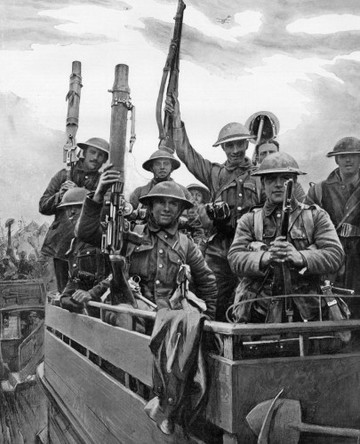
The mix and mutual support that these youths learned during the war, which they still embraced once they went home and that was already crumbling in the 1930s, is a very distinguished characteristic of the Lost Generation of the 1920s.
For sects of society like Jews and African Americans, the Great War was an experience that showed them new opportunities as they fought together with their compatriots and – like in the case of the Jews – often side by side.
This produced a new awareness that they could be full citizens of their respective nations, which was true for the Jews and for African Americans alike.
After the war, these sectors sought a new space and often found it, if only for a short time. They found and opportunity to mix and contribute to the larger society they were part of.
RESOURCES
Enzo Travero, A ferro e fuoco. La guerra civile europea (1914-1945), Il Mulino, Bologna, 2008 (Fire and Blood: The European Civil War, 1914-1945, Verso Publishers, 2016)
NOTE: This blog contains affiliate links (including Amazon links). When you click on a link and make a purchase, I may receive a commission for advertising the product (at no extra cost to you).


10 Comments
D.A.Cairns
The breaking down or re ordering of the relationship between the sexes was truly an important by product of the Great War. Unfortunately, throughout your article you referred to genre, when I think you meant gender. Nonetheless, it was an interesting and thoughtful piece.
https://dacairns.com.au/blog/f/a-to-z-blogging-challenge-h
jazzfeathers
Goodness me! I can’t believe I made that mistake. I can only say that in my native language, genre and gender are the same word. I got confused 😶. Thanks so much for point it out. In this day, I could rectify it 😜
Viktor Steiner
“Genre, class, culture, race barriers (as well as gender) all became irrelevant when surviving was the main goal” – good perception!
jazzfeathers
The battlefields of WWI were a very strange, very unique, if certainly terrible place.
J.Gi Federizo
This is a good hstory lesson for someone like me who is not American. I mean I am aware of most of these, but gaining more information and insight is always a good thing.
jazzfeathers
I think we can all learn a lot by these events.
Chrys Fey
So much changed with that generator and during those times.
jazzfeathers
Very true. All decades have their changes and evolution, but I think the decades around WWI were particularly momentous.
Ronel Janse van Vuuren
I really like the photo of the man and dog — it truly expresses this new way of appreciating life after the war.
Ronel visiting for H: My Languishing TBR: H
Minotaur
jazzfeathers
I love it too. As soon as I saw it, I knew I wanted ot use it in this series :-)